Ba Trai Dao 2026: Lan Ha Bay’s Three Peaches Beach, Legend and How to Visit
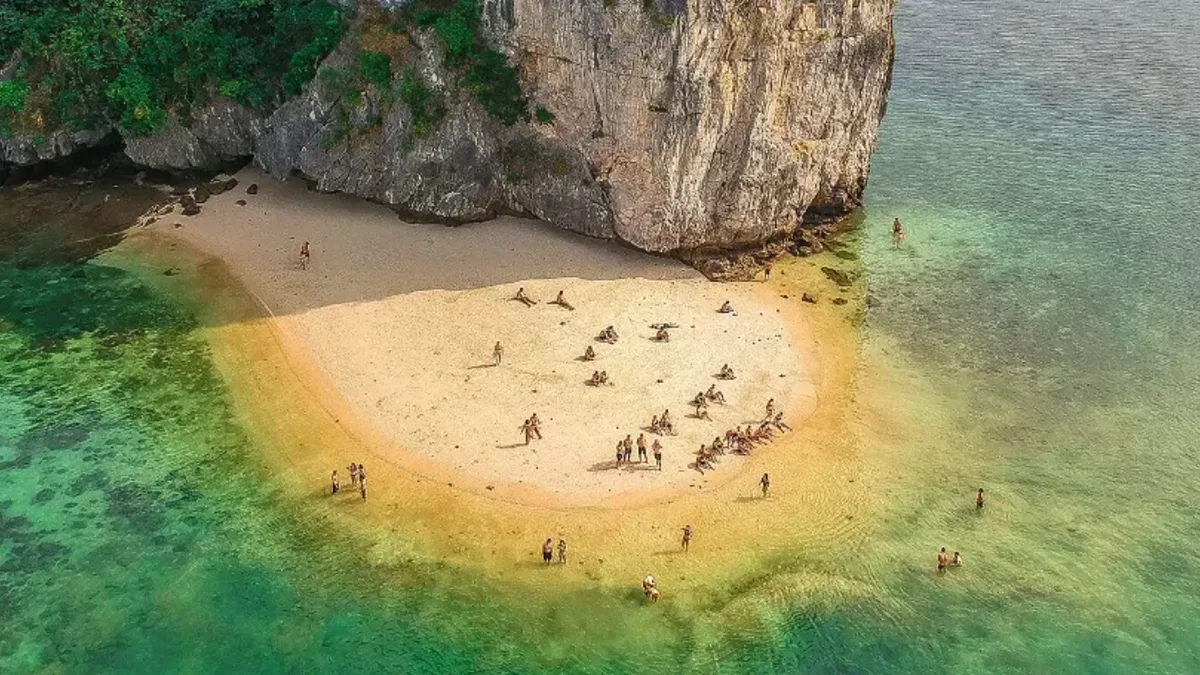
Ba Trai Dao (Three Peaches) is a cluster of three small, rounded limestone islets with crescent sandy beaches in Lan Ha Bay, about 15 km from Cat Ba town in Hai Phong. The sand is widest at lower tide, the water is calm and clear, and it is one of the favourite swim and kayak stops on Lan Ha Bay cruises.
Good to know (checked October 2026): Ba Trai Dao is in Lan Ha Bay (Hai Phong), not Halong Bay, although many websites place it in Quang Ninh. The beaches almost disappear at high tide, and there are no facilities on the islets. The stop is covered by the Lan Ha Bay fee, included in cruise prices. Kayaking in the Cat Ba / Lan Ha bays was suspended by local authorities in late 2025; when it is not allowed, cruises use rowed boats, swimming or deck viewing instead, so check the rule in force for your date.
Ba Trai Dao Islets at a Glance
| Location |
Lan Ha Bay, Cat Ba Archipelago, Hai Phong |
| Distance |
About 15 km from Cat Ba town by boat |
| What it is |
Three rounded islets (reported about 23 m high) each with a small crescent beach |
| Official routes |
Lan Ha route 2 (Ben Beo – Viet Hai estuary – Quai To – Ba Trai Dao – Dark and Bright Cave); Ha Long – Lan Ha cruise waterway |
| Activities |
Swimming, kayaking, photography |
| Best for |
Families and beach lovers |
| Fee |
Lan Ha Bay sightseeing fee (included in cruises) |
| Best time |
May–September, at lower tide |
| Nearby |
Dark and Bright Cave, Ao Ech, Viet Hai Village |
| Find it |
Google Maps |
Is Ba Trai Dao worth it? Yes. It is one of the best swim stops in the whole Halong region: cleaner, calmer and far less crowded than Ti Top beach.
 The three rounded islets of Ba Trai Dao, Lan Ha Bay
What Makes Ba Trai Dao Special
Three beaches in one
Each islet has its own small curve of sand, so even when a few boats arrive you can usually find space.
Clear, calm water
The sheltered position gives gentle water for swimming and beginner kayaking.
A kayaking hub
Ba Trai Dao is a meeting point for kayak trips to Dark and Bright Cave nearby.
UNESCO setting
The islets lie in the Cat Ba Archipelago, part of the Ha Long Bay – Cat Ba Archipelago World Heritage site since 2023.
The Legend of the Three Peaches
From the water the three rounded hills look like peaches side by side, hence Ba Trái Đào, three peach fruits. A local legend tells of a fairy named Út who fell in love with a poor fisherman and stole three magic peaches from the Jade Emperor’s garden for him. When she was discovered, the peaches were turned into three rock islets and the lovers were separated forever.
 White sand at Ba Trai Dao at low tide
Things to Do
1. Swim from the beach
Best at lower tide when the sand is widest; the water is shallow near the shore.
 Swimming between the islets of Ba Trai Dao
2. Kayak around the islets
A short, easy loop for beginners, often combined with a paddle to the caves.
3. Photograph the three peaks
The classic view is from the water, so take it from your kayak or tender.
 Kayaking around Ba Trai Dao in Lan Ha Bay
4. Relax
On overnight cruises the stop is often timed for late afternoon, when the light is softer.
Fees and Practical Information
| Item |
Details (checked October 2026) |
| Fee |
Cat Ba archipelago bay fee: 120,000 VND adult / 60,000 VND child (Hai Phong table, kept for 2026); included in cruises |
| Facilities |
None; changing and showers on your boat |
| Safety |
Swim where the crew indicates; no lifeguards |
| Rules |
Take all rubbish back; no coral or shells |
How to Get to Ba Trai Dao
| Option |
Notes |
| Lan Ha Bay cruise from Ha Long |
Swim stop on many itineraries |
| Boat tour from Cat Ba (route 2) |
Half or full day with kayaking |
| Lan Ha day cruise |
Some include a swim at Ba Trai Dao |
Best Time to Visit
| Months |
Conditions |
| May–September |
Warm water; storm risk July–September |
| October–November |
Pleasant; water cooling |
| December–April |
Too cool for most swimmers |
Plan with the best time to visit Halong Bay.
Ba Trai Dao vs Ti Top Beach
|
Ba Trai Dao |
Ti Top Island |
| Bay |
Lan Ha (Hai Phong) |
Halong (Quang Ninh) |
| Crowds |
Moderate |
Very busy |
| Facilities |
None |
Showers, kiosks |
| Viewpoint |
No |
Yes, about 400 steps |
Our view: For swimming, Ba Trai Dao Islets wins; for a viewpoint, Ti Top Island wins. Compare the bays in Halong Bay vs Lan Ha Bay.
How It Fits a Lan Ha Bay Cruise
- Kayak at Dark and Bright Cave
- Swim at Ba Trai Dao Islets
- Visit Viet Hai Village or Trung Trang Cave on Day 2
Ships that stop here include Aqua Luxury Cruise, Celina of the Sea, Indochine Cruise and Aqua of the Seas.
Local Expert Tips
These tips come from more than a decade of arranging Halong Bay trips for international travellers.
- Water shoes help on rocky patches
- Use reef-safe sunscreen
- Ask your crew to time the stop for lower tide
- Leave nothing behind: there are no bins
Plan Your Visit
Find a cruise with Ba Trai Dao Islets in our Lan Ha Bay cruises or message us on WhatsApp +84 886 261 368. Best Price Guarantee included.
Frequently Asked Questions about Ba Trai Dao
1. Where is Ba Trai Dao?
Ba Trai Dao is in Lan Ha Bay, Hai Phong, about 15 km from Cat Ba town. Read our Lan Ha Bay guide.
2. Is Ba Trai Dao in Halong Bay or Lan Ha Bay?
Lan Ha Bay (Hai Phong), part of the same World Heritage site as Halong Bay.
3. Why is it called Ba Trai Dao (Three Peaches)?
The three rounded islets look like three peaches; a legend links them to magic peaches stolen by a fairy.
4. Can you swim at Ba Trai Dao?
Yes, best from May to September at lower tide.
5. When is low tide at Ba Trai Dao?
It changes daily; cruise crews time the stop. Ask us via our contact page.
6. Is there an entry fee for Ba Trai Dao?
It is covered by the Lan Ha Bay fee, included in cruises.
7. Do cruises stop at Ba Trai Dao?
Many Lan Ha Bay cruises do.
8. Is Ba Trai Dao crowded?
Moderately at midday in summer; much quieter than Ti Top.
9. Are there facilities at Ba Trai Dao?
No; use the facilities on your boat.
10. Can I kayak at Ba Trai Dao?
Yes, around the islets and on to Dark and Bright Cave.
11. How do I get to Ba Trai Dao from Cat Ba?
Join a route 2 boat tour from Ben Beo pier.
12. Ba Trai Dao or Ti Top: which beach is better?
Ba Trai Dao for swimming; Ti Top for the view.
13. Is Ba Trai Dao good for children?
Yes, the water is calm; supervise at all times. More in our Halong Bay FAQs.
14. What is the best time to visit Ba Trai Dao?
May–September; see our best time guide. Plan Ba Trai Dao with us.


