1. About Luon Cave — Key Facts at a Glance
| Detail |
Information |
| Vietnamese name |
Hang Luồn (Luon Cave) |
| English meaning |
“Tunnel” — referring to its arch-shaped water passage |
| Also known as |
Luon Lagoon, Tunnel Cave |
| Location |
Northeast side of Bo Hon Island, Halong Bay, Quang Ninh Province |
| Distance from Bai Chay Wharf |
Approximately 14 km |
| Distance from Sung Sot Cave |
Approximately 1 km (same island) |
| Tunnel length |
Approximately 60 meters |
| Tunnel height |
Approximately 3–4 meters (varies with tide) |
| Hidden lagoon |
Approximately 1 square kilometer, fully enclosed |
| Surrounding cliffs |
Up to 25 meters high |
| Access |
Kayak or bamboo boat only — cruise ships cannot enter |
| National recognition |
National historical and cultural treasure, designated 2011 |
| Accessed via |
Halong Bay Sightseeing Route 2 |
2. Location: Where Is Luon Cave?
Luon Cave is located on the northeast side of Bo Hon Island, in the southern section of Halong Bay, Quang Ninh Province, Vietnam — approximately 14 kilometers from Bai Chay Tourist Wharf in Halong City.
The cave sits less than 1 kilometer from Sung Sot Cave on the same island, making Bo Hon Island one of the most destination-rich stops in the entire bay. Together with Sung Sot Cave, Trong Cave, and Trinh Nu Cave, Luon Cave forms part of a cluster of attractions all included on Halong Bay Sightseeing Route 2 — the bay’s most popular cruise itinerary, and the only route that includes swimming.
Because the cruise ship cannot pass through Luon Cave’s low archway, vessels anchor near the entrance and transfer passengers by kayak or small bamboo boat for the final approach — making this one of the more hands-on, active stops on a typical Halong Bay cruise day.
Unlike Halong Bay’s larger show caves such as Sung Sot Cave or Thien Cung Cave, which formed primarily through rainwater dissolving limestone from above, Luon Cave was shaped by a different geological process entirely: tidal erosion at the base of a limestone mountain. Over millions of years, the relentless action of tides, ocean waves, and sea winds gradually wore away the foot of the karst formation on Bo Hon Island, carving out a narrow tunnel that now connects the open bay to a completely enclosed lagoon hidden inside the cliffs.
The evidence of this marine origin is still visible today. Fossilized shells of oysters, snails, and crabs remain embedded in the limestone walls of the tunnel — silent proof that this entire area was once submerged beneath the ocean, millions of years before the tunnel and lagoon took their current shape. This combination of erosion-carved geology and ancient marine fossils makes Luon Cave a genuinely distinctive site within Halong Bay’s broader karst landscape, geologically different from the dissolution caves that dominate the rest of the bay.
4. The Kayaking Experience: Through the Tunnel
The defining experience of Luon Cave begins the moment your kayak or bamboo boat approaches the low, arch-shaped entrance. The tunnel — approximately 60 meters long — has a ceiling height that changes with the tide: at low tide, paddling through is straightforward, but at higher tide, the archway can become low enough that visitors must duck down or even lie flat in the kayak to pass beneath the rock. This natural variability adds a genuine sense of adventure that visitors consistently describe as one of the most memorable parts of a Halong Bay cruise.
Two ways to experience the tunnel are available on most cruises:
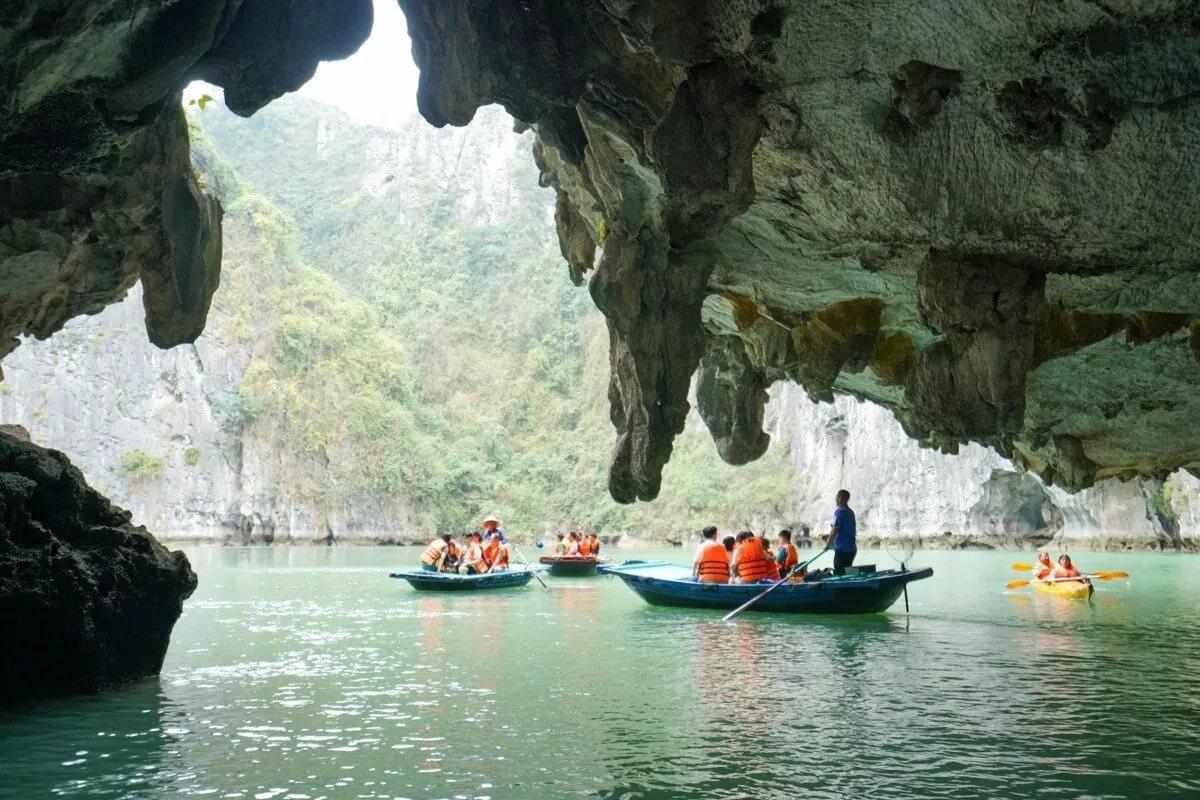 Kayaking Experience & Boat Rowing in Luon Cave Halong Bay Vietnam
- Kayaking (self-paddled): The most popular and immersive option. Visitors paddle themselves through the tunnel at their own pace, with the freedom to pause, take photos, and explore close to the cliff walls.
- Bamboo boat (rowed by a local): A more relaxed alternative, where a local guide rows the boat through the tunnel — ideal for visitors who prefer to sit back and take in the scenery hands-free, or those traveling with young children or limited mobility.
Emerging from the dark, narrow tunnel into the sudden openness of the hidden lagoon is, for most visitors, the single most striking moment of the Luon Cave experience — a dramatic contrast between confinement and openness that has earned the cave its nickname, the “heaven gate.”
5. Inside the Lagoon & Wildlife
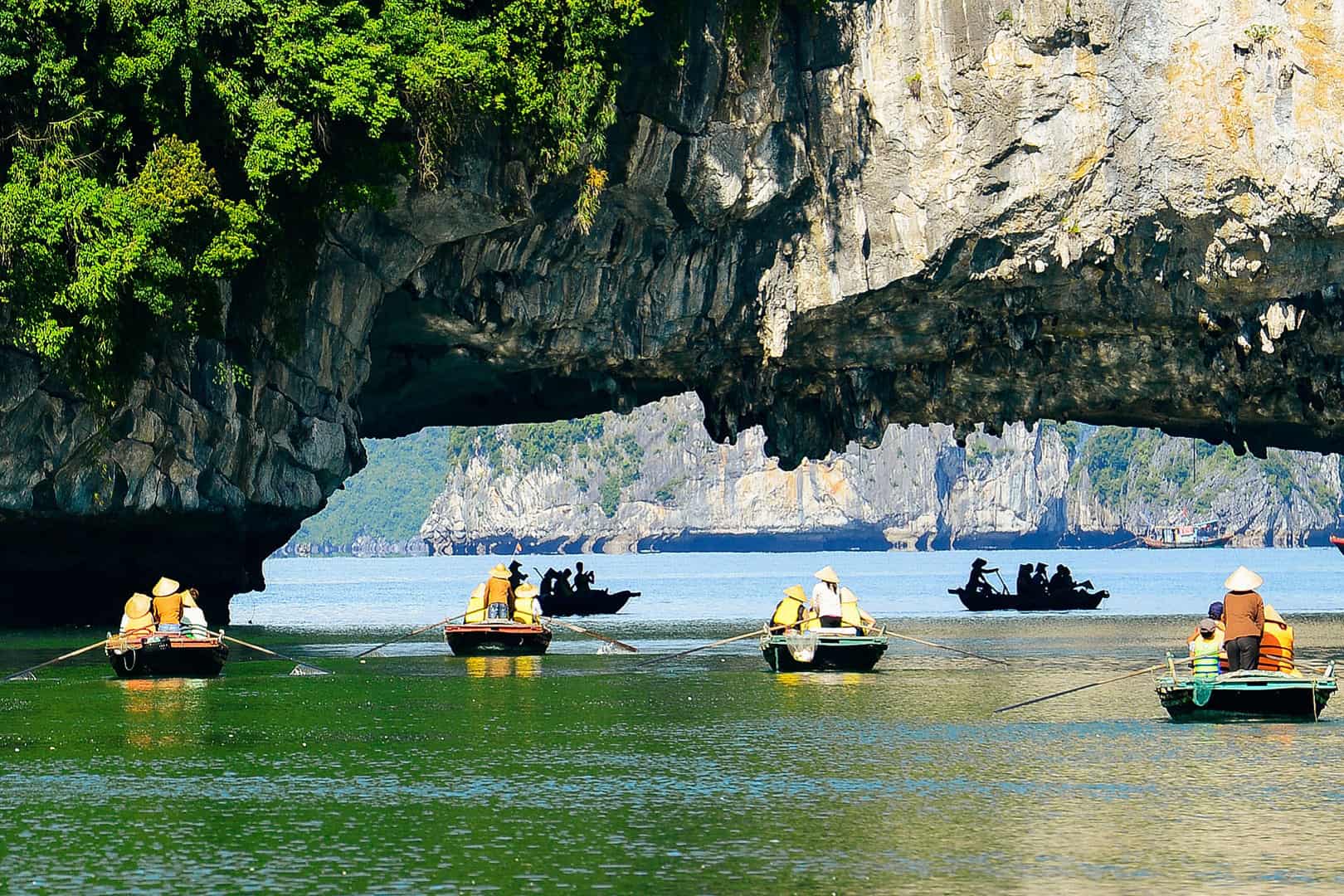 Luon Cave’s fully enclosed lagoon, sheltered by 25-meter limestone cliffs, creates a perfectly still, mirror-like water surface unlike anywhere else in Halong Bay.
Beyond the tunnel, Luon Cave opens into a breathtaking enclosed lagoon of approximately 1 square kilometer, completely surrounded by sheer limestone cliffs rising up to 25 meters high. Sheltered entirely from the wind and waves of the open bay, the lagoon’s water surface is almost perfectly still — creating a natural mirror that reflects the surrounding cliffs, lush green vegetation, and sky above. Many visitors describe the feeling of arriving here as stepping into a secret, private world entirely separate from the rest of Halong Bay.
Wildlife in and Around Luon Cave
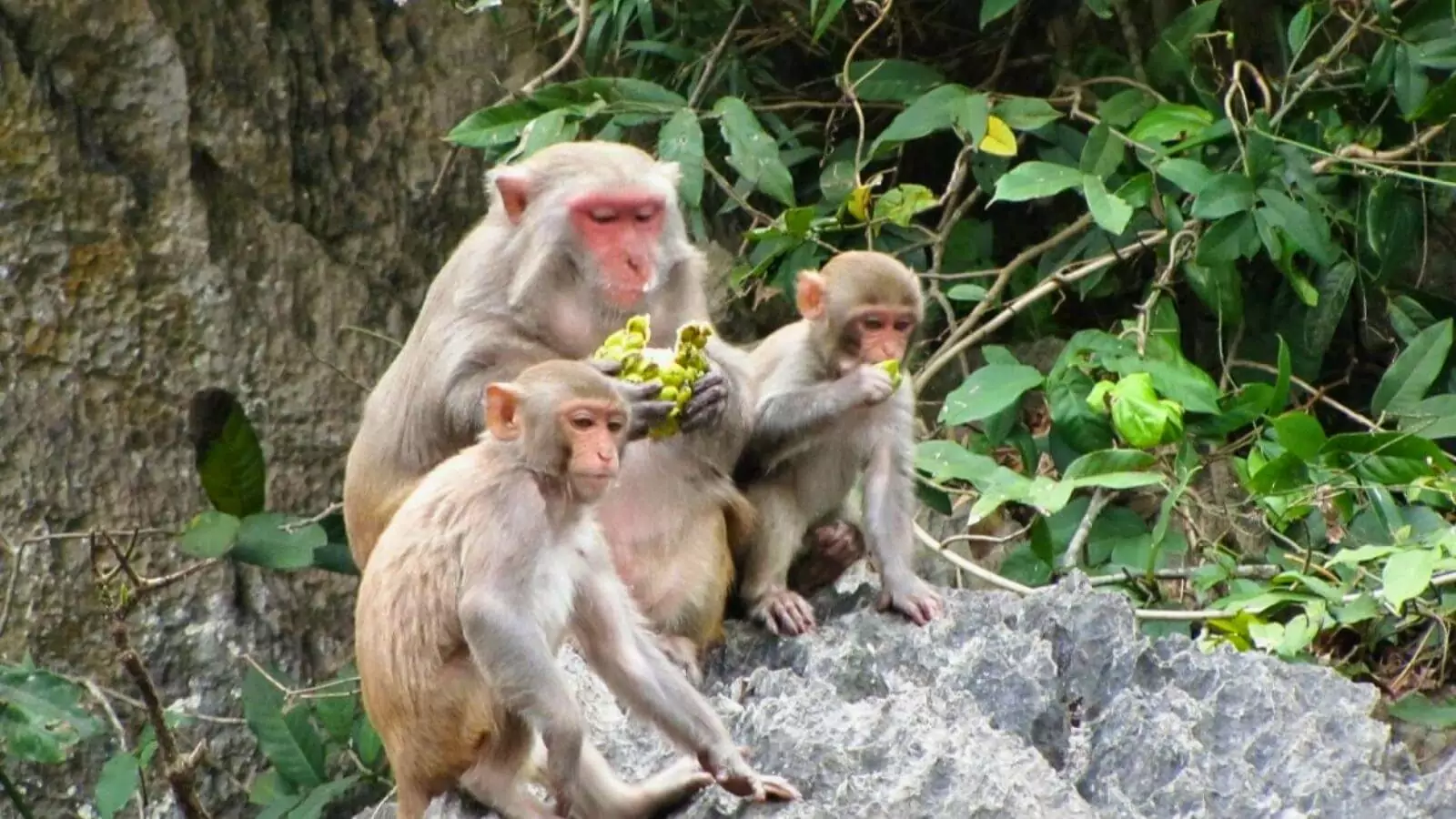 An estimated 50 wild golden monkeys inhabit the cliffs surrounding Luon Cave’s lagoon, according to the Halong Bay Management Board.
The cliffs surrounding the lagoon are home to a population of wild golden monkeys — according to the Halong Bay Management Board, an estimated 50 individuals inhabit the rocky slopes around Luon Cave. Visitors paddling through the lagoon often spot small groups climbing the cliff faces or moving through the trees above the water, their calls occasionally breaking the otherwise near-total silence of the enclosed space. The clear water beneath your kayak also reveals glimpses of the bay’s marine life — small fish and other sea creatures are frequently visible darting through the shallows.
⚠️ Wildlife etiquette: While golden monkeys are sometimes fed fruit by visitors, conservation-minded travelers should avoid feeding wild animals, as it can alter their natural foraging behavior and create dependency on tourists. Observe respectfully from a distance and let your guide manage any interactions.
6. Ticket Prices & How to Visit Luon Cave in 2026
6.1 Entrance & Kayak/Boat Rental
Luon Cave is included as a standard stop on Halong Bay Sightseeing Route 2, purchased at Tuan Chau International Passenger Port or Halong International Passenger Port.
| Item |
Price (VND) |
Price (USD approx.) |
| Day trip (Route 2) |
290,000 VND / person |
~$12 USD |
| 2 Days / 1 Night |
590,000 VND / person |
~$24.60 USD |
| 3 Days / 2 Nights |
790,000 VND / person |
~$33 USD |
| Kayak rental (if not included) |
From ~50,000 VND / person |
~$2 USD |
Note: Most Halong Bay cruise packages include kayaking or bamboo boat access to Luon Cave as part of the standard itinerary — always confirm with your operator whether this activity is included or charged separately, as policies vary between cruise lines.
6.2 Halong Bay Sightseeing Route 2
Route 2 is the most popular and activity-rich cruise route in Halong Bay, and the only route that includes swimming. Luon Cave is one of several signature stops, alongside:
- Soi Sim Island
- Ti Top Island
- Sung Sot Cave (Surprise Cave)
- Bo Nau Cave
- Ho Dong Tien Cave
- Luon Cave ⭐
- Trong Cave
- Trinh Nu Cave
Departure times: 6:30–8:00 AM or 12:00–1:00 PM. Duration: 5–6 hours.
6.3 How to Get There from Hanoi
- By road: Approximately 2.5–3 hours via the Hanoi–Haiphong Expressway. Most cruise operators include round-trip transfers from Hanoi.
- By boat from port: From Tuan Chau or Halong International Port, the boat journey to Bo Hon Island takes approximately 30–45 minutes.
7. Best Time to Visit Luon Cave
| Month |
Temperature |
Conditions |
Rating |
| Feb – June |
20–28°C |
Calm seas, comfortable temperatures, ideal for kayaking |
⭐⭐⭐⭐⭐ Best overall |
| Sep – October |
24–28°C |
Sunny and clear, calmer waters return after summer rains |
⭐⭐⭐⭐⭐ Excellent |
| Oct – November |
26–28°C |
Sunny and mild, peak international tourism season |
⭐⭐⭐⭐ Popular |
| July – August |
28–32°C |
Hot, possible typhoons; rougher seas can limit access |
⭐⭐⭐ Manageable with caution |
Pro tip: Visit Luon Cave in the morning when the water is at its calmest and crowds are thinner — by midday, the cave can become busy with kayaks and bamboo boats from multiple cruise groups arriving at once. Check tide tables before your trip: lower tide makes paddling through the tunnel noticeably easier.
8. Practical Tips Before You Go
- Wear quick-dry clothing. Kayaks can take on a small amount of water, and you may get slightly splashed paddling through the low tunnel — light, water-friendly clothes are ideal.
- Bring a waterproof bag or case for your phone or camera — there is a real chance of getting wet during the tunnel passage, especially at higher tide.
- Wear reef-safe sunscreen and a hat. There is little shade once you’re out on the lagoon.
- Life jackets are mandatory and provided by your cruise operator for all kayaking and boat activities.
- Choose a bamboo boat if you prefer to relax or are traveling with young children, elderly family members, or anyone with limited mobility — no paddling required, and a local guide handles the navigation.
- Budget 30–45 minutes for the full round-trip kayaking experience, including time to enjoy the lagoon before heading back.
- Swimming is generally not permitted inside the lagoon — the focus here is on paddling and sightseeing rather than swimming, which is typically reserved for Ti Top Beach elsewhere on Route 2.
9. Luon Cave — Frequently Asked Questions
The questions we get asked most often by travelers planning to visit Luon Cave in Halong Bay.
Last updated: June 2026 | Information verified against multiple Halong Bay tourism sources and the Halong Bay Management Board. Some figures (exact dimensions, wildlife population estimates) vary across local sources and are presented as approximate where applicable.


